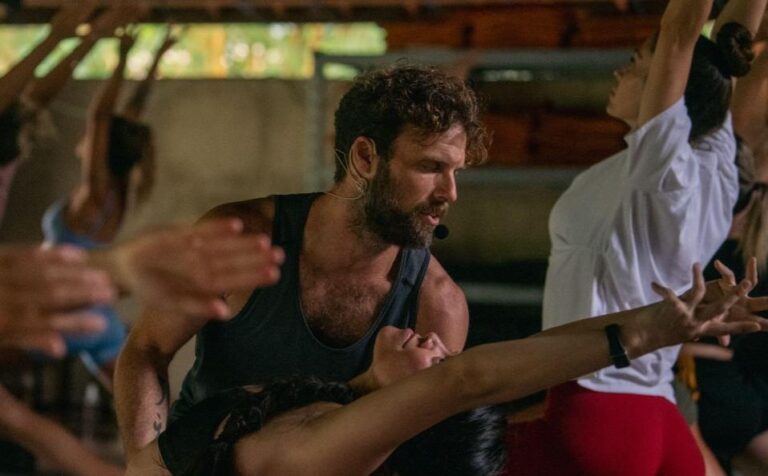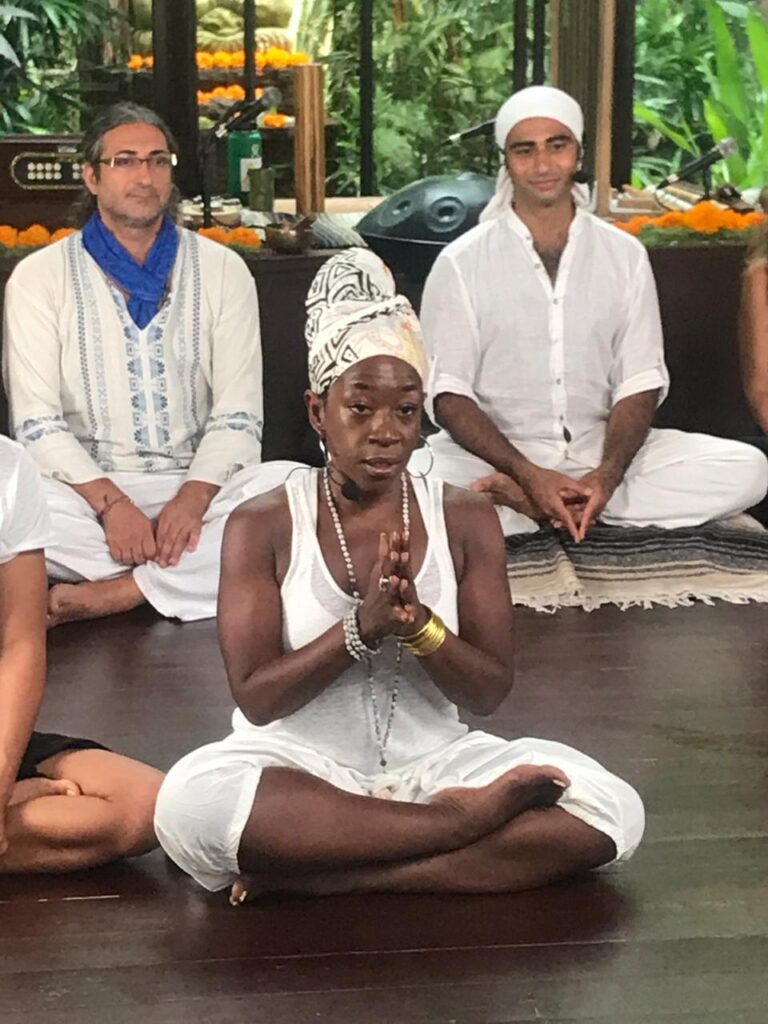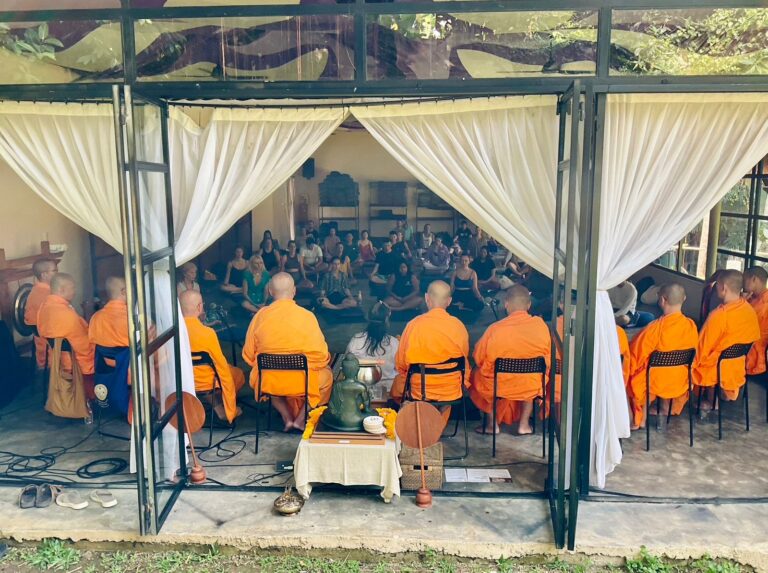
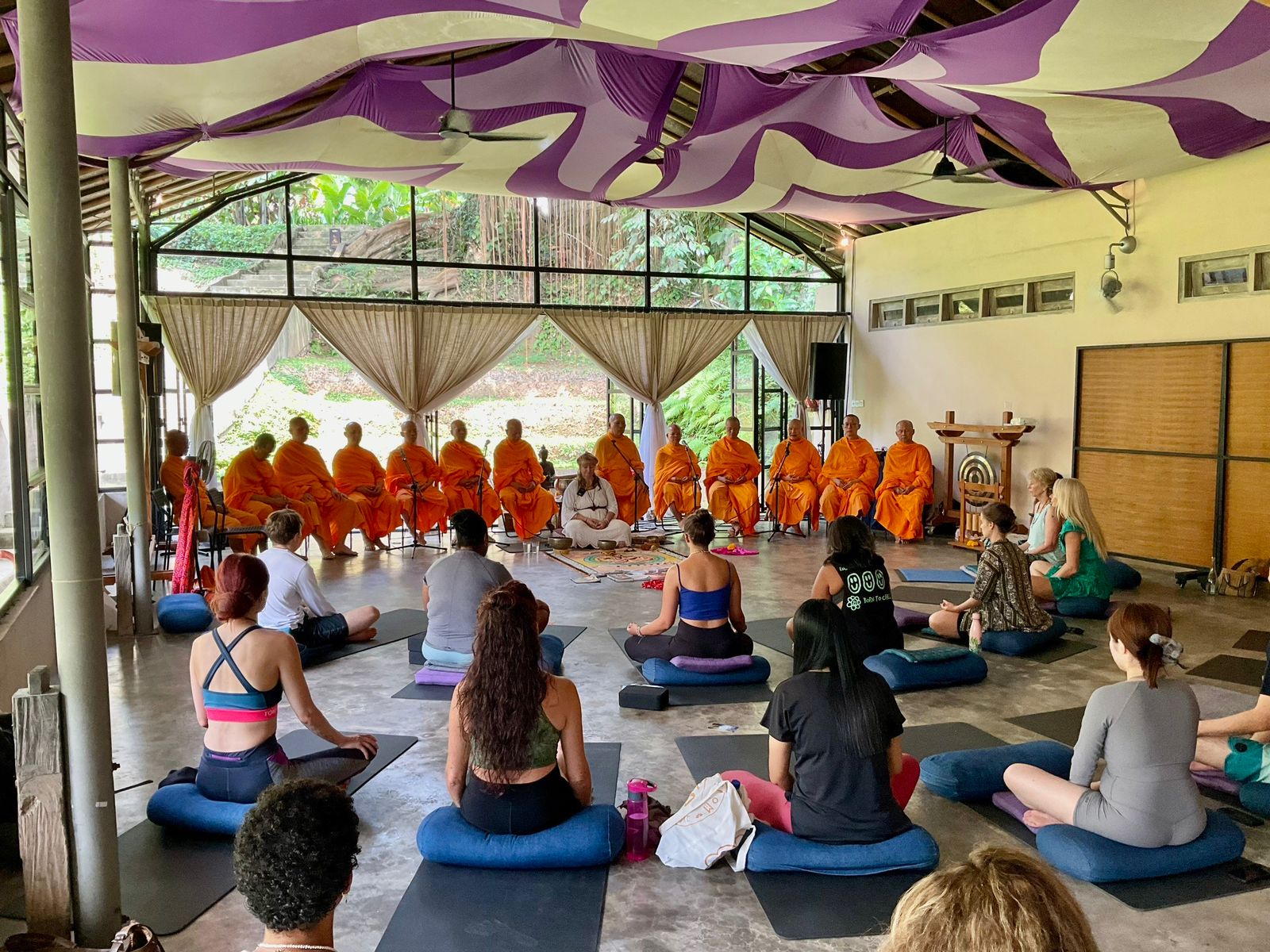
Each year, the International Day of Peace invites us to pause — to breathe, reflect, and remember how we, as a global community, can embody compassion, non-violence, and presence in times of turbulence.
At The Yoga Barn, we invited teachers and friends from our worldwide community to share their reflections, practices, and prayers for peace. What follows is a tapestry of voices — from poetry to memoir, meditation to neuroscience — each offering a unique window into how the teachings of yoga can guide us in meeting suffering and injustice with clarity, courage, and care.
This is the first in a three-part offering that explores peace through different dimensions: beginning with inner practice, moving through sound and collective expression, and expanding into justice and activism. In this opening installment, we turn inward — to discover how yoga can help us cultivate peace within ourselves, in our daily lives, and in our communities.
Living Peace: Ahimsa, Satya & Santosha in Daily Life
by Jana Johnson
The International Day of Peace isn’t a lofty concept or something that just governments and leaders should be working toward. It is an invitation to take a few moments to reevaluate what peace means to me.
To me, peace is relative. Some days are more peaceful than others. The teachings of yoga remind me again and again that peace isn’t separate from the choices I make. It’s how I speak, how I act, how I show up in the world. Three principles from the yoga tradition often return to me: from the yamas there is ahimsa and satya, and from the niyamas there is santosha.
Ahimsa is often translated simply as non-harming. It seems straightforward: don’t hurt others, don’t hurt yourself. But over the years, I’ve realized it’s not that simple. Ahimsa is not about being passive; it asks us to be courageous, especially in today’s world. To notice when harm is happening and to find a way, however small, to stand against it. It lives in little moments like catching the sharpness in my voice, or softening my inner critic when it gets loud. It’s there in the daily choices I make about food, consumption, and the impact I have on other beings. And sometimes, it shows up as the harder path, choosing to speak up for those who can’t, even when silence would be easier.
Satya (truthfulness) works hand in hand with ahimsa. On one level, it’s about honesty with myself and with others. But satya also points toward a bigger Truth: that every being deserves to live peacefully, to be nourished, and to exist free of domination or suppression. Living into this practice requires discernment. It’s not about blurting out raw truth regardless of impact — that can itself cause harm. Sometimes, satya means holding my truth quietly, or noticing where I’m avoiding discomfort and choosing to speak or stay silent. It’s important to stand up for Truth in a world full of half-truths and manipulations.
And then there’s santosha (contentment). This one has been so important in my own life. Santosha doesn’t mean pretending everything is fine. It’s about meeting life as it is, without adding extra stories or drama. Even in difficult times, santosha steadies my heart so I can respond rather than react.
The nice thing about these principles is that they don’t require a yoga mat or meditation cushion. Ahimsa, satya, and santosha are living practices. They can be woven into how we speak, the choices we make, and the way we meet each moment.
These three principles — ahimsa, satya, and santosha — are like threads. On their own, they’re powerful, but woven together they create a way of living peace, not just longing for it.
— Jana Johnson, Psychospiritual Counselor | Spiritual Guidance & Mentorship
Ahimsa and the Ground of Peace
by Punnu Wasu
As a Meditation, Kirtan, Sound Healing, Reiki, and Yoga teacher, I have come to understand ahimsa — non-harming and compassion — not as an abstract philosophy, but as a daily living practice. In today’s world, where suffering and injustice are so visible, this principle feels more essential than ever. Violence can appear in many forms — not only physical aggression, but also the subtle ways we judge ourselves, disconnect, or exploit the earth.
In my classes and trainings — whether guiding Active Consciousness Meditation, Reiki, or leading Kirtan and sound healing — I witness how deeply people long to return to a state of inner gentleness. So often, the real healing begins when they release self-criticism, soften their breath, or allow themselves to rest in silence. Ahimsa begins here: in the tender act of listening, of honoring what is present without force.
My own practice helps me respond to suffering with clarity and steadiness. In sessions, my role is not to “fix,” but to hold space with compassion, to trust the intelligence of the process.
I have also seen the incredible power of collective care. In Kirtan, as voices rise together, there is no hierarchy — just a shared vibration that unites us in joy. In Reiki trainings, students learn not only to channel healing energy, but also to support each other through vulnerability and growth. In Blissful Sound Healing journeys, the resonance of instruments and crystal bowls creates a field where people feel held, connected, and safe.
For me, peace feels like spaciousness in the heart. Personally, it is the stillness of mantra or meditation — a vastness that is steady even when life feels turbulent. Collectively, peace feels like the harmony I hear when many instruments, voices, and energies come together in balance — not identical, but attuned, creating a whole that is greater than the sum of its parts.
Of course, staying grounded in peace is a practice in itself. The world can feel overwhelming, and I too experience moments of doubt, sadness, or fatigue. When this happens, I return to simple anchors: breathing deeply, chanting, or immersing in sound vibrations. These practices remind me that peace is always available — not outside, but within.
Ahimsa is more than avoiding harm. It is a conscious choice to create conditions for healing — in ourselves, our relationships, and the collective. It is remembering that even the smallest gestures matter: the tone of our voice, the way we listen, the presence we bring. Each act of kindness, each breath of awareness, each note sung in devotion becomes a seed.
When we plant these seeds together — through meditation, song, and acts of care — we nurture the possibility of a more compassionate world. And in this way, ahimsa becomes not only a principle, but a living force of transformation.
— Punnu Wasu, Kirtan, Sound Healing, Reiki and Yoga Teacher at The Yoga Barn
Breathe for Peace
by Karina Kalilah
When I first started receiving Breathwork sessions, I noticed an opening to a deep well of peace within. As someone with an A-type, go-go-go lifestyle, these states of peace allowed me to take presence to the next level.
For me, ahimsa is about cultivating spaces where people feel safe to be fully themselves, without judgment or shame. Embodying ahimsa looks like honesty, integrity, and courage to dismantle patterns of harm.
After becoming a Breathwork facilitator, I realized what I was doing was so much more than just supporting people with breath. Breathwork is part of the global change — from war to peace.
My breath practice is part of my protest. The more I can love and accept all parts of myself, the more I can lead and guide in community.
Peace, when embodied, is a form of leadership that ripples out from within. It is an internal transmission — when one feels peace, it creates safety for others. Especially now, with so much turmoil on the planet, the more of us who embody peace and presence, the better our world will be.
Every breath is an invitation into peace, presence, and the possibility of a different world.
— Karina Kalilah, Breathwork Practitioner & Sound Healer
Closing Note
This first collection reminds us that peace begins within — in the ways we breathe, listen, and live with compassion. It’s not separate from daily life; it lives in each breath, each word, and each act of care.
May these voices invite you to return, again and again, to the ground of your own practice as a source of healing, strength, and peace for the wider world.
🌿 This piece is Part 1 of our Ahimsa in Action series at The Yoga Barn. Learn more about our community and explore ways to give back here
✨ Learn more about our incredible faculty here
✨ Next in the series: Art, Sound & Collective Expression — exploring how music, voice, and creativity can unite us in peace.